
How much will a liter of Italian extra virgin olive oil from the new 2026/2027 harvest season really cost?
It is a question that, as the olive harvest approaches, concerns consumers, producers, oil mills, and industry businesses.
However, giving a precise price today would be rather unreliable.
In August 2026, the new Italian olive oil campaign has not yet begun, and the price of new oil will depend on numerous factors that will only become clearer as the harvest approaches: quantity of available olives, oil yield, weather conditions, production quality, market demand, and the inventory situation from the previous campaign.
However, we can start from the data available today to understand what is happening and, above all, explain how the price of a liter of Italian extra virgin olive oil is actually formed.
Before purchasing, in fact, it is useful to distinguish three very different concepts:
Confusing these three values often leads to incorrect comparisons.
At the end of July 2026, for example, ISMEA recorded a price of €4.55/kg for unspecified extra virgin olive oil on the Bari market, while at the beginning of June the same price was €6.60/kg.
This does not mean, however, that a bottle of good Italian extra virgin oil should be sold at 4.55 euros per liter.
The reason is simple: that is a price at origin expressed in €/kg, not the price of a packaged, labeled, boxed, and shipped product to the consumer.
To better understand how oil is produced before even discussing price, you can read How Contedoro Extra Virgin Olive Oil Is Made. Contedoro describes its supply chain as a controlled path from olive groves to the consumer’s table.
There is no single national price for extra virgin olive oil.
Prices vary depending on:
This is a fundamental point.
Simply saying “extra virgin oil costs X euros” without specifying where, which oil, and at which stage of the supply chain can be very misleading.
Generic bulk oil traded at origin is not directly comparable with territorial, certified, packaged oil sold directly to consumers.
Even within the same territory, there can be significant differences.
An example is Ravece, a cultivar deeply connected to Irpinia. The page dedicated to Contedoro Ravece Oil notes that the price can also vary depending on olive yield, a decisive element in calculating the final cost.
Read also: Olive Yield: What It Is and What It Depends On.
Yield indicates how much oil is obtained from pressing a given quantity of olives and is one of the central aspects during the harvest season.
At present, it is not possible to establish precisely the price of Italian extra virgin oil from the 2026/2027 campaign.
A serious forecast should simultaneously consider:
Furthermore, there is no single uniform Italian campaign.
The situation can vary greatly between Puglia, Campania, Sicily, Calabria, Tuscany, and other olive-growing areas.
For this reason, it is more accurate to speak of price ranges and market dynamics rather than promising a precise figure for new oil today.
Contedoro dedicates a specific page to new oil, where it explains when it arrives, how it changes in the first months, and why properly stored oil maintains its characteristics even after the period immediately following harvest.
This is probably the most important distinction in the entire article.
When we read an oil price at origin, we are talking about bulk oil at a specific commercial stage.
The consumer, however, purchases a product that has undergone many other operations.
To the raw material price may be added:
Therefore, price at origin and retail price are not two directly comparable figures.
To better understand the production process, you can explore How We Make Contedoro EVO Oil, which describes the stages from olive arrival at the mill to packaging.
There is also another common error.
Prices at origin are often expressed in euros per kilogram, while in stores and e-commerce we are accustomed to thinking in euros per liter.
The two units of measurement do not coincide.
One liter of oil weighs approximately 0.91-0.92 kg, with small variations related to temperature and composition.
Therefore, a price of €5/kg does not automatically equal €5/liter.
It is a technical detail, but very important when reading articles, social media posts, or news about prices.
There is no single figure valid for everyone here either.
The actual production cost depends heavily on the type of olive grove and business organization.
For example, these factors have an impact:
A flat, easily mechanizable olive grove can have very different costs compared to a hilly or fragmented one.
Yield also radically changes the unit cost.
If a greater quantity of oil is obtained from 100 kg of olives, the raw material cost is distributed over more kilograms of product.
If the yield is low, the cost of each liter increases.
This is precisely why olive yield is one of the data to monitor most closely during each campaign.
Not necessarily.
And a very high price does not automatically guarantee excellent oil either.
Price is only one of the elements to evaluate.
Before purchasing, it is advisable to check:
To explore these aspects further, you can read Where to Buy Quality Extra Virgin Olive Oil, which emphasizes the importance of choosing producers and shops that are transparent about origin and production method.
Read also: Complete Guide: EVO Oil or Virgin Oil, Which to Choose?
It is also useful for understanding why not all oil on the market belongs to the same commercial category.
When we purchase packaged oil, part of the final price is also related to packaging.
And its impact varies considerably depending on the format.
The glass bottle is one of the most widely used formats for table oils.
To the cost of the oil must be added:
Glass also increases the overall shipping weight.
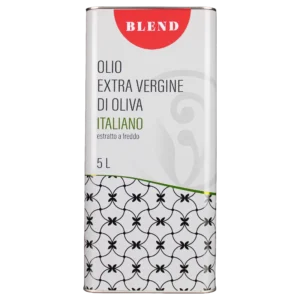
The tin provides complete protection from light and is widely used for larger formats.
Here too, the cost of the container, closure, label or printing, and cardboard for transport must be considered.
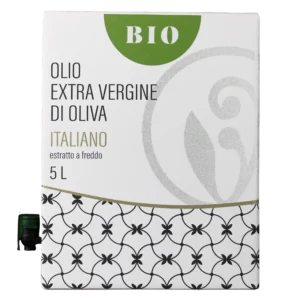
The Bag in Box is particularly interesting for those who consume oil regularly.
The inner bag tends to compress during use, limiting air entry compared to many rigid containers.
It is also a practical solution in larger formats.
You can compare the different formats available in the Contedoro Shop, where oils are available in multiple packaging types and capacities.
A 500 ml bottle and a multi-liter package do not have the same packaging cost per liter.
A small bottle still requires:
With a larger format, these costs are distributed over a greater quantity of oil.
This is why it is normal for the price per liter to decrease as the format increases, even when the oil contained is exactly the same.
Oil is a heavy product.
This makes logistics costs particularly important in online sales.
The following have an impact:
In the case of glass bottles, specific packaging must also be used to reduce the risk of breakage.
When an online store offers free shipping, therefore, the shipping cost does not disappear: it is simply absorbed by the seller under the conditions provided by the offer.
This is an element to consider when comparing two apparently different prices.
At this point, the initial question changes.
It is not enough to ask:
“How much does a liter of extra virgin oil cost?”
You must also ask:
“What oil am I purchasing at that price?”
Behind two bottles both labeled extra virgin olive oil, there can be significant differences in terms of:
For this reason, it is also useful to know the product from a sensory perspective.
Read also: Complete Guide to Olive Oil Tasting, which explains how to recognize aromas, bitterness, pungency, and characteristics of an oil during tasting.
On the eve of the new harvest, the price of Italian oil will not depend solely on what will be produced in 2026.
An important role can also be played by stocks from the previous campaign.
If significant quantities of unsold oil remain in the system, oil mills must simultaneously address two needs:
selling already stored product and preparing financially for the new harvest.
This can affect company liquidity and olive purchasing dynamics.
But an important error must be avoided:
having stored oil does not necessarily mean having all extra virgin oil of the same quality.
Different categories may be present in the market, including extra virgin oil and virgin oil, which meet different requirements.
To better understand the distinction, you can read Complete Guide: EVO or Virgin Oil, Which to Choose?
To understand how much Italian extra virgin olive oil may cost in the 2026/2027 campaign, observing new production alone is not enough.
It is also necessary to consider how much oil is still present in tanks before the start of the new harvest.
According to the official Frantoio Italia report from ICQRF – MASAF, updated as of June 30, 2026, significant stocks of olive oils were still present in Italy. The data is particularly interesting because it captures the market just before the new campaign.
To consult the official source directly, you can visit the Frantoio Italia Report – MASAF.
This situation can affect the market because oil mills must simultaneously address two needs:
But an important clarification must be made immediately:
not all oil in stock belongs to the same quality category.
The system may in fact contain extra virgin olive oil, virgin oil, lampante oil, refined olive oil, pomace oil, and products still awaiting classification.
For this reason, it would be incorrect to speak generically of “tanks full of high-quality extra virgin oil.”
The reality is more complex.

Puglia is one of the most important territories of Italian olive growing, and the market dynamics recorded in the region inevitably have weight on the national sector.
ISMEA prices also clearly show the particular phase the market went through in summer 2026.
On the Bari market, on July 20, 2026, unspecified extra virgin olive oil was quoted at €4.55/kg ex-works. During the same period, other Italian markets recorded different prices, confirming how much the market can vary depending on area and product type.
You can directly consult the official ISMEA olive oil prices.
This data is important mainly for one reason:
it demonstrates that there is no single national price for extra virgin oil.
In July 2026, for example, ISMEA simultaneously recorded:
So when you read online “Italian oil costs X euros,” you should always ask:
which oil, which area, which category, and which stage of the supply chain?
An oil mill that arrives at the beginning of the new campaign with significant quantities of product still stored must face a problem that is not only logistical but also financial.
The oil present in tanks represents immobilized capital.
Meanwhile, preparation for the new harvest is necessary, which involves new expenses:
If the product from the previous campaign has not yet been sold, available liquidity may decrease.
This can make it more difficult to face the new campaign and, in some cases, can also affect the conditions under which olives are purchased from olive growers.
This is one of the reasons why stocks, olive prices, and final oil prices are closely connected, even though there is no automatic and identical relationship for all producers.
Yes.
The start of the new campaign does not automatically render oil produced in the previous year unusable.
Properly produced and stored oil can continue to be marketed, provided it continues to meet the requirements for the declared category and the information on the label is correct.
This is a point that many consumers underestimate.
Purchasing a bottle in November or December does not automatically mean purchasing oil produced a few weeks earlier.
The purchase date and the harvest date are two different things.
And this is where learning to read the label becomes essential.
Read also: How to Properly Store Extra Virgin Olive Oil
In general terms, it is possible to create blends of oils belonging to the same category, provided the final product meets all requirements and the labeling is correct.
However, a distinction must be made between cultivar blends and blends of different campaigns.
A cultivar blend can be a technical and sensory choice intended by the producer.
Contedoro, for example, also offers oils obtained from the combination of different varieties, creating balanced aromatic profiles.
Mixing oils from different campaigns is particularly relevant when you want to indicate a specific harvest campaign on the label.
And this is where European regulations become very precise.
The official reference is Delegated Regulation (EU) 2022/2104, which also governs olive oil marketing standards.
You can directly consult EU Regulation 2022/2104 on EUR-Lex.
The harvest campaign can be indicated when the conditions provided by regulations are met; in particular, the indication of the year must refer to the content actually belonging to that harvest.
This means that commercial formulas such as the following should not be freely interpreted:
new harvest, new oil, new production.
To truly know which campaign an oil belongs to, you must verify what is stated on the label.
When you purchase Italian extra virgin olive oil, especially in the months immediately following the new harvest, always check both the front and back of the package.
The most important elements are:
Do not stop at the graphics.
Do not stop at the color of the oil.
And do not stop at the simple label “new oil” if you want to know the campaign precisely.
No.
The batch primarily serves product traceability.
It is a code that allows the producer to identify a specific production or packaging.
Therefore, the batch number should not be automatically interpreted as the harvest year.
The harvest campaign, on the other hand, is specific information referring to the period when the olives were harvested.
They are two different pieces of information.
No.
This is also a common error.
The best before date indicates until when the product, if properly stored, maintains its specific characteristics.
It does not directly indicate when the olives were harvested.
Therefore, a bottle with a date far in the future is not necessarily from the new campaign.
To understand the year, you must look for the specific indication relating to the harvest, when present.
When you want to purchase Italian extra virgin olive oil, check the origin indication and do not limit yourself to the company name or package graphics.
An Italian brand does not automatically imply that the oil contained is obtained exclusively from Italian olives.
The label must be read carefully precisely to distinguish:
For this reason, if the goal is to purchase Italian oil from the 2026/2027 campaign, the most interesting information is:
origin + harvest campaign, when the latter is indicated.
No.
Packaging and origin are two different things.
Oil can be packaged in an Italian facility but come from olives or oils of other origins.
For this reason, the indication relating to origin is much more important than the packager’s address when you want to know the actual origin of the product.
Read also: Where to Buy Quality Extra Virgin Olive Oil
No.
Color depends on several factors:
Intense green oil may be very young, but color alone does not prove the harvest campaign.
The same applies to cloudiness.
Cloudy oil is not automatically fresher or better than filtered oil.
If you want to explore sensory evaluation further, you can read How to Recognize Quality Extra Virgin Olive Oil.
Contedoro has chosen a precise policy for the arrival of the new campaign.
The goal is not to arrive at harvest with significant quantities of previous production still to be placed, so as to be able to focus attention on the new oil.
This choice is facilitated by a model based on short supply chain and direct sales to the final consumer.
Through the online shop, the relationship between production and customer is more direct, and some intermediate commercial steps are reduced.
You can learn more about this approach on the Our Oil page.
Reducing intermediaries does not mean eliminating all costs.
In fact, these remain:
But a more direct supply chain can allow the producer to have greater control over the final price and the relationship with the consumer.
In the case of offers that include free shipping, moreover, the customer does not separately bear the shipping cost: the company absorbs it as part of the promotion.
To see formats and availability, you can consult the Contedoro Shop.
The new campaign is linked to nature and therefore not everything can be programmed with absolute precision.
Quantity, olive yield, and actual harvest timing can vary.
For this reason, reservation can be useful for those who wish to receive the first available batches of new production.
Contedoro dedicates a specific page to New Oil 2026, where information relating to the new harvest is presented.

The most accurate answer, in August 2026, is:
there is not yet a single, definitive price.
The new campaign market will simultaneously depend on:
The ISMEA data available today can help us understand the market direction, but do not automatically represent the price we will find on the shelf or in the shop during the new campaign.
The Frantoio Italia Report from MASAF, on the other hand, allows us to understand how much product availability is still present in the system before the arrival of new olives.
These two elements – prices at origin and stocks – will be among the data to observe in the coming months.
Before choosing bottle, tin, or Bag in Box, check:
The price of Italian extra virgin olive oil from the 2026/2027 campaign will be one of the most discussed topics in the coming months.
But the price per liter, taken alone, tells only part of the story.
Behind that number are:
olives, harvest, yield, mill, energy, labor, storage, packaging, transport, and distribution.
To these elements, in 2026, a particular market situation is added: still significant stocks before the new harvest and very different prices at origin between one production area and another. The most useful official data for following this evolution remain those from MASAF – Frantoio Italia and ISMEA Markets.
For the consumer, the most useful rule therefore remains simple:
do not choose oil based solely on price.
Read the label, verify the origin, check the campaign when indicated, and try to understand what supply chain is behind the package.
Contedoro will continue to follow the progress of the 2026/2027 campaign by updating information on new oil and the availability of the new harvest.
Read also: How to Recognize Quality Extra Virgin Olive Oil
Read also: Cold Extraction of Extra Virgin Olive Oil: From Harvest to Malaxation
Official source: Frantoio Italia – ICQRF/MASAF
Price source: ISMEA Markets – Olive Oil Prices
Regulations: Delegated Regulation (EU) 2022/2104 – EUR-Lex