
Extracting extra virgin olive oil does not represent the end of the production process.
Once separated from the olive paste, the oil must be stored correctly to maintain its aromas, flavors, and sensory characteristics for as long as possible.
This is a fundamental phase, because even oil obtained from high-quality olives and processed correctly can deteriorate if exposed to unsuitable conditions.
In the modern oil mill, therefore, storage is an integral part of quality.
After extraction, the oil is generally transferred to food-grade stainless steel tanks, designed to protect it from the external environment and allow hygienic and controlled management.
To understand the previous phases of the process, you can read:
Read also: Continuous Cycle Oil Mill: How the Decanter and EVO Oil Extraction Work
and
Read also: Cold Extraction of Extra Virgin Olive Oil: From Harvest to Malaxation

Stainless steel is now one of the most widely used materials in oil mills and oil storage facilities.
The reasons are mainly practical and hygienic.
A stainless steel tank:
For a producer, therefore, the tank is not simply a container.
It is a fundamental tool for accompanying the oil in the phase following extraction and keeping it in the best possible conditions before packaging.
One of the main enemies of extra virgin olive oil is oxygen.
Contact with air promotes oxidation processes, which over time can alter the aromas, taste, and stability of the product.
For this reason, many producers use systems that reduce contact between oil and air inside the tanks.
In our case, Contedoro stores oil in stainless steel tanks using nitrogen to protect the product from contact with oxygen.
Nitrogen creates a barrier in the headspace of the tank and helps reduce the oil’s exposure to air.
This is a choice consistent with the production philosophy we follow in all phases: preserving the oil’s natural characteristics as much as possible.
To learn more about our production method, you can visit Our Oil
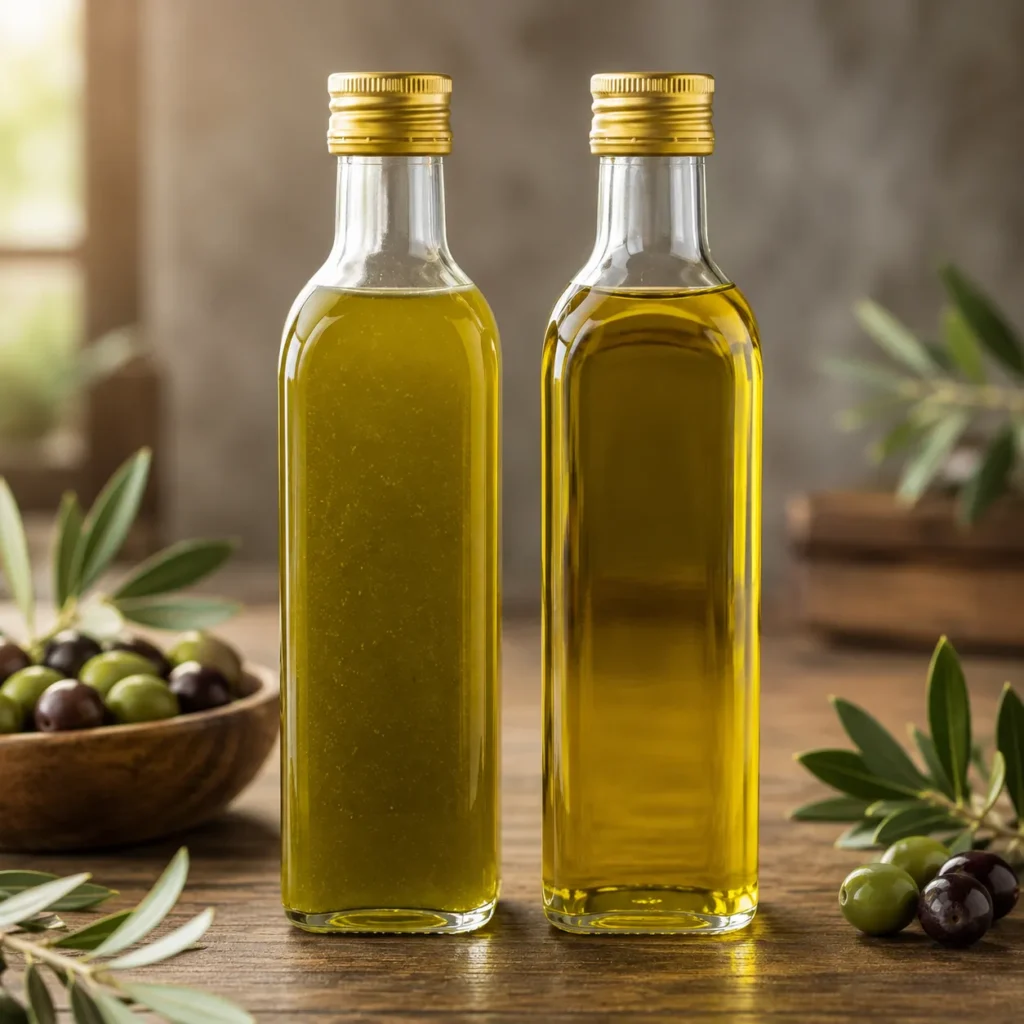
After extraction, the oil may appear somewhat cloudy due to the presence of micro-solid particles and small amounts of water still in suspension.
At this point, the producer can choose to filter it or market it unfiltered.
Filtration removes most of the solid residues and the water component still present.
This can help improve the product’s stability over time.
A filtered oil may appear clearer, but this does not mean it has lost quality or value.
Unfiltered oil may appear cloudier and have, especially in the first months, a more rustic and immediate appearance.
The presence of natural suspended residues, however, requires particular attention to storage.
Therefore, cloudy does not automatically mean better, and clear does not automatically mean inferior.
Quality must be evaluated by considering the product as a whole.
Read also: New Oil: What It Is, When It Arrives, and How to Recognize It
Once extracted and packaged, the oil naturally continues its evolution.
To store it correctly, it must be protected especially from four factors:
Light accelerates oxidative processes.
For this reason, oil should be stored in containers that protect it from light exposure.
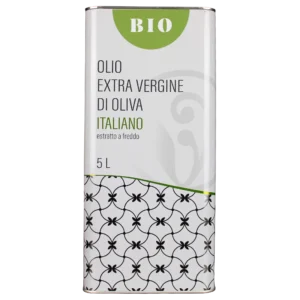
Dark glass bottles, cans, and ceramic jars are all solutions designed to shield the product.
Read also: Ceramic Jar for Extra Virgin Olive Oil: History, Craftsmanship, and Benefits
High temperatures can accelerate the natural quality decline of the oil.
For this reason, it is better to avoid storing it:
The ideal is a cool, dry place away from light.
Every time we open a bottle, air enters.
For this reason, it is important to always close the container tightly after each use.
The larger the empty space in the bottle, the greater the amount of air present inside.
For this reason, especially when consumption is slow, it can be useful to choose formats appropriate to your habits.
Oil is not a product meant to improve with aging.
Unlike some wines, EVO oil is appreciated especially for its freshness, aromas, and character, characteristics that naturally evolve over time.
For this reason, it is important to always follow the producer’s instructions and store it correctly.
Once purchased, the consumer also has an important role.
To store EVO oil correctly, it is advisable to:
These simple precautions help preserve the product’s characteristics longer.
Read also: How to Recognize Quality Extra Virgin Olive Oil
Many beliefs still circulate about EVO oil that are repeated as absolute truths.
Let’s look at the most common ones.
False.
Color can vary based on:
A golden yellow oil can be just as excellent as an intense green one.
Color alone is not a sufficient parameter to evaluate quality.
False.
Cloudiness can depend on the presence of solid particles and water microdroplets in suspension.
A filtered oil can maintain very high quality characteristics and have better stability over time.
Not necessarily.
Organic certification concerns the cultivation and production method.
The final quality of the oil also depends on many other factors:
Contedoro also produces organic extra virgin olive oil, but what matters is always the entire production process.
New oil often has intense aromas and a particularly pronounced character.
However, this does not mean that oil properly stored after a few months is automatically of lower quality.
Freshness is important, but it must be considered together with the quality of the raw material and proper storage.
In most modern oil mills, no.
Contemporary plants mainly use continuous cycle systems based on centrifugation.
For this reason, it is more correct to speak of oil extraction.
Read also: Cold Extraction of EVO Oil: Pressing or Extraction?
The peppery sensation can be linked to the presence of phenolic compounds, but it is not the only quality indicator.
An oil must be evaluated considering its overall profile and the balance between aromatic sensations, bitterness, and pungency.
Different cultivars can also produce oils with very different characteristics.
Read also: The Different Olive Varieties and Their Impact on Extra Virgin Olive Oil
This is one of the habits to avoid.
Near the stove, oil is frequently exposed to:
It is better to store it in a cupboard or cool, dry pantry.
False.
Extra virgin olive oil can also be used for cooking and frying.
Its composition, characterized by a high proportion of oleic acid and the presence of natural antioxidants, makes it suitable for various culinary uses.
Naturally, it is always important to properly manage temperature and cooking times.
Read also: Extra Virgin Olive Oil in the Kitchen: Uses and Pairings
Absolutely not.
An oil can change profoundly depending on:
This is precisely what makes the world of EVO oil so rich.
A Single-Cultivar Ravece, for example, will have different characteristics compared to a blend obtained from multiple varieties.
False.
Technology allows the process to be controlled with great precision, but machines do not decide:
These decisions remain linked to the knowledge of the producer and the oil mill operator.
For Contedoro, innovation and tradition are not opposing concepts.
Tradition represents the experience accumulated over time.
Technology allows that knowledge to be applied with more precise tools.
In our oil mill, we use a new-generation continuous cycle plant, we work without adding water during the extraction phase, and we store the oil in stainless steel tanks protected with nitrogen.
The goal is always the same: respecting the raw material and enhancing the characteristics of the olives.
Technology does not replace experience.
It makes it more effective.
To learn about our history, you can visit About Us.

Pressing refers to the traditional system with presses, while in modern continuous cycle oil mills, oil is generally separated from the paste by centrifugation.
It indicates oil obtained through specific mechanical processes while maintaining the temperature within the limits required to use this designation.
Modern systems can operate without added water or with very reduced quantities. This allows different management of by-products and can help limit the dispersion in the aqueous phase of some water-soluble compounds naturally present in the olives.
It is the aqueous component coming mainly from the water naturally present in the fruit and, in systems that use it, from any water added during extraction.
Stainless steel is durable, easily sanitizable, and suitable for contact with food. It also allows the use of systems that reduce the oil’s exposure to oxygen.
Nitrogen is used to reduce contact between oil and oxygen in the headspace of the tank, helping to limit oxidation during storage.
There is no absolute answer.
They are two products with different characteristics. Filtered oil has fewer solid residues and suspended water and can offer greater stability over time; unfiltered oil may have a cloudier appearance, especially in the first periods after production.
In a cool, dry, and dark place, away from the stove, direct sunlight, and other heat sources.
No.
Extra virgin olive oil evolves over time and is generally appreciated for its freshness. Proper storage helps maintain its characteristics longer.
After following the entire journey of the olives, we can understand a fundamental concept:
a great oil is not born from a single operation.
It is born from the sum of many choices.
Everything begins in the olive grove.
Then come:
harvest → transport → washing → crushing → malaxation → extraction → separation → storage → packaging.
Every step must be managed correctly.
Advanced technology cannot correct compromised raw material.
Similarly, excellent olives can lose part of their value if they are processed or stored poorly.
It is precisely this complete vision of the supply chain that guides the work of Contedoro.
From the freshly harvested olive to the bottle that arrives on the table, the goal remains to preserve as much as possible what the fruit has given us.
Because a great extra virgin oil is not born by chance.
It is born from knowledge, experience, technology, and above all from the attention dedicated to every single detail.
If you want to learn more about the individual production phases, you can continue with the other blog articles:
Read also: Cold Extraction of EVO Oil: From Harvest to Malaxation
Read also: Continuous Cycle Oil Mill: How the Decanter Works
Read also: How to Recognize Quality Extra Virgin Olive Oil
Read also: Giving Extra Virgin Olive Oil as a Gift: Ideas, Meaning, and Tips