
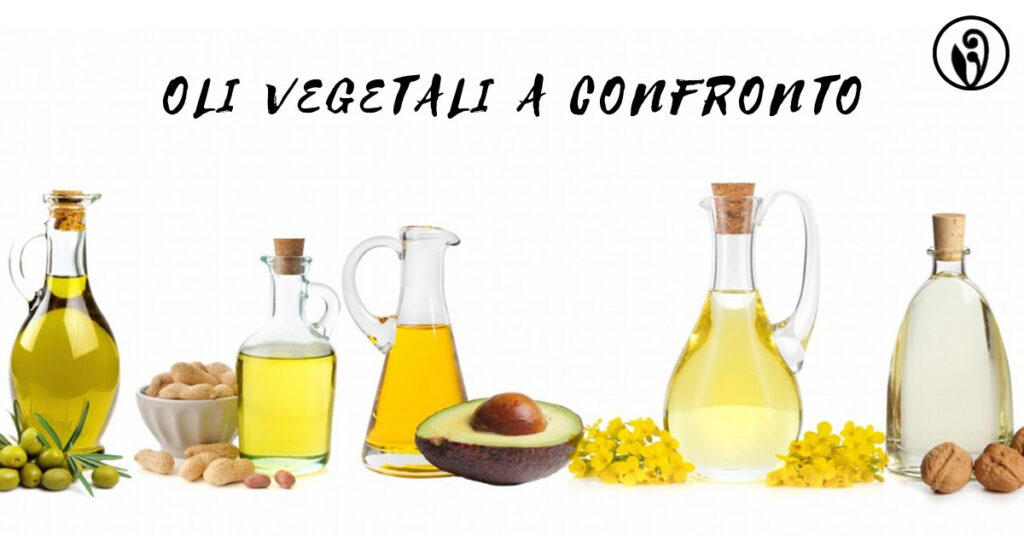
When we find ourselves among the supermarket shelves to purchase oil, we are faced with a wide range of different products. Next to the precious and well-known extra virgin olive oil, other oils of different origin and type appear, such as: sunflower seed oil, peanut oil, flaxseed oil, palm oil, wheat germ oil or almond oil. These are only the most common and usual ones that are easiest to find, but in reality the selection is much wider and we end up not knowing what to choose and purchase because we are too confused by the options.
Can they all be used in the same way? Is it better to use them raw or for cooking? Which is the best oil for frying? What are their properties?
These are the ordinary questions that fill our minds and dissuade us from purchasing. In this article we will try together to understand how to use them best in the kitchen and what are the most significant differences that make one better than another. Keep reading!
First of all, you need to know that the oil extraction method changes depending on whether it involves fruits (such as olive drupes) or seeds (sunflower). The extraction of oil from olive drupes is an industrial process that occurs through grinding of the pulp and pit and subsequent separation of the oil fraction from the other solid and liquid components. Whereas, the extraction of oil from seeds occurs through chemical processes and/or at high temperature, that is, using solvents or applying high mechanical pressure that produces high temperatures which can cause color damage, altering the oil.
When purchasing an oil, you need to know its smoke point, which is very important for determining whether it can be suitable for frying. The higher the smoke point value, the better the oil will be for frying!
Oils with high polyunsaturated fatty acid content (seed oils) should not be used for cooking, because harmful substances would form, as they are very sensitive to heat. It is preferable to use them raw, benefiting from their effects on cardiovascular health.
Having clarified this, let’s now look in detail at the characteristics of the individual types of most common oils that try to compete in the market with the king of the Italian table and kitchen: extra virgin olive oil, also called EVO Oil.
Sunflower seed oil is the most widespread and well-known after olive oil. It is rich in polyunsaturated fatty acids, especially linoleic acid. If it is cold-pressed, it retains vitamin E, an important antioxidant for protecting our cells. Having a very neutral flavor, it is used in the kitchen for preparing desserts or savory dishes. It is also widely used in vegan cooking for preparing mayonnaise. We commonly use it a lot for frying, but in reality this is an incorrect practice, because it has a very low smoke point, less than 130°C. Even for frying, the best oil is olive oil!
So it is an oil, the seed oil, that should be used raw, to dress salads, prepare sauces or preserve vegetables in jars. But could a generic seed oil replace an award-winning extra virgin olive oil for raw dressings?
It is absolutely unacceptable.
The composition of peanut oil is similar to that of olive oil. It is very rich in monounsaturated and polyunsaturated fatty acids. It has a more delicate flavor, which is why it is mainly used in desserts. It contains a good source of vitamin E and becomes rancid more slowly than other vegetable oils. The smoke point of peanut oil that is refined, that is, the most widely marketed one, is 230°C, so it is suitable for frying as an alternative to olive oil, although it is always advisable to alternate them.
Flaxseed oil consists mainly of polyunsaturated fatty acids of the omega-3 and omega-6 series, useful for heart health and for reducing high cholesterol. It is rich in antioxidants, which protect us from oxidative stress, but due to its composition it cannot be used for cooking, because it tends to deteriorate very quickly. In fact, its smoke point is very low and is equal to 110°C. Due to its properties and delicate flavor, it is highly recommended to use it raw to dress salads, or, more commonly, it is used in cosmetics to make hair packs, making hair shiny, silky and soft.
Read also -> Flavored Oil: Types and Common Uses
Palm oil is the other oil that has recently been gaining wide distribution. There is the unrefined one, rich in vitamins and antioxidants and a bit healthier; and the refined one that is widely marketed. The latter, despite being a vegetable oil, rather than being liquid, is predominantly solid at room temperature. This characteristic is due to the substantial content of long-chain saturated fatty acids. In palm oil, palmitic acid is particularly abundant, to which several studies attribute a hypercholesterolemic effect, which increases cardiovascular risk. But in palm oil there are also significant percentages of the monounsaturated oleic acid, typical of the more “healthy” oils such as olive oil. It has excellent palatability, excellent resistance to oxidation, in fact it becomes rancid very slowly, and a low production cost.
For these reasons it is widely used in confectionery companies to make doughs and creams; and furthermore, its smoke point which is 240°C, makes it suitable for frying.
However, excessive consumption both raw and cooked can have negative effects on health and metabolism, so it should be used sporadically or almost not at all.
Wheat germ oil is obtained from cold pressing of the germ of soft wheat. Its use is more widespread in cosmetics because it helps delay aging, as well as improve the appearance of skin and hair and prevents stretch marks. It can be used to make anti-dandruff packs. From a health standpoint, it strengthens the heart, reduces constipation and can be useful in case of mental fatigue or depression. These properties are due to the high presence of vitamin E and B group vitamins and the high presence of polyunsaturated fatty acids. In the kitchen, being a very unstable and easily perishable oil, it is used as a dressing and not for cooking.
Almond oil is widely known in cosmetics for its emollient and refreshing properties, excellent against stretch marks and for making skin more elastic and hydrated. However, it is little known that in the kitchen it can be used to create original and healthy dishes. Rich in vitamins, minerals, proteins and fatty acids, and thanks to its particular taste, it can be used in marinating meat to make it softer, tastier and more nutritious. It can be combined with other ingredients to make fruit smoothies or juices, or as a salad dressing. It is also excellent for frying fritters, ravioli or castagnole, having a smoke point of 220°C.