
When we observe a good extra virgin olive oil, its color often strikes us immediately: a range that goes from intense green to golden yellow, passing through all the intermediate shades. But is the color of EVO oil just an aesthetic detail or does it tell us something more about its quality? In this article by Contedoro, we explain everything there is to know about olive oil color, debunking false myths and helping you understand when an oil is truly good.
The color of EVO oil depends on two main elements: the olive variety (cultivar) and the ripening stage of the olives at the time of harvest. In general:
This is why the color can vary from light olive green to warmer tones, depending on when the olives were processed and their origin.
No, the color of extra virgin olive oil does not determine its quality. In fact, in official panel tests, the sensory analysis of the oil takes place in dark glasses precisely to prevent the color from influencing the judgment. Therefore, a yellow oil can be just as excellent as a brilliant green oil, if produced correctly.
What matters is the organoleptic profile: fruity, bitter, and spicy are the true indicators of a superior extra virgin olive oil, not the chromatic shade.
However, there are signs that should not be ignored. If an oil has a dull brown, cloudy color or tends towards grayish, it could be an oxidized or old oil that has lost its qualities. Also, a transparent oil, excessively clear, might have been filtered too much or diluted, reducing its intensity.
Conversely, a dark residue at the bottom of the bottle is not necessarily a problem: it is often micro-particles of unfiltered olives, typical of freshly squeezed oil.
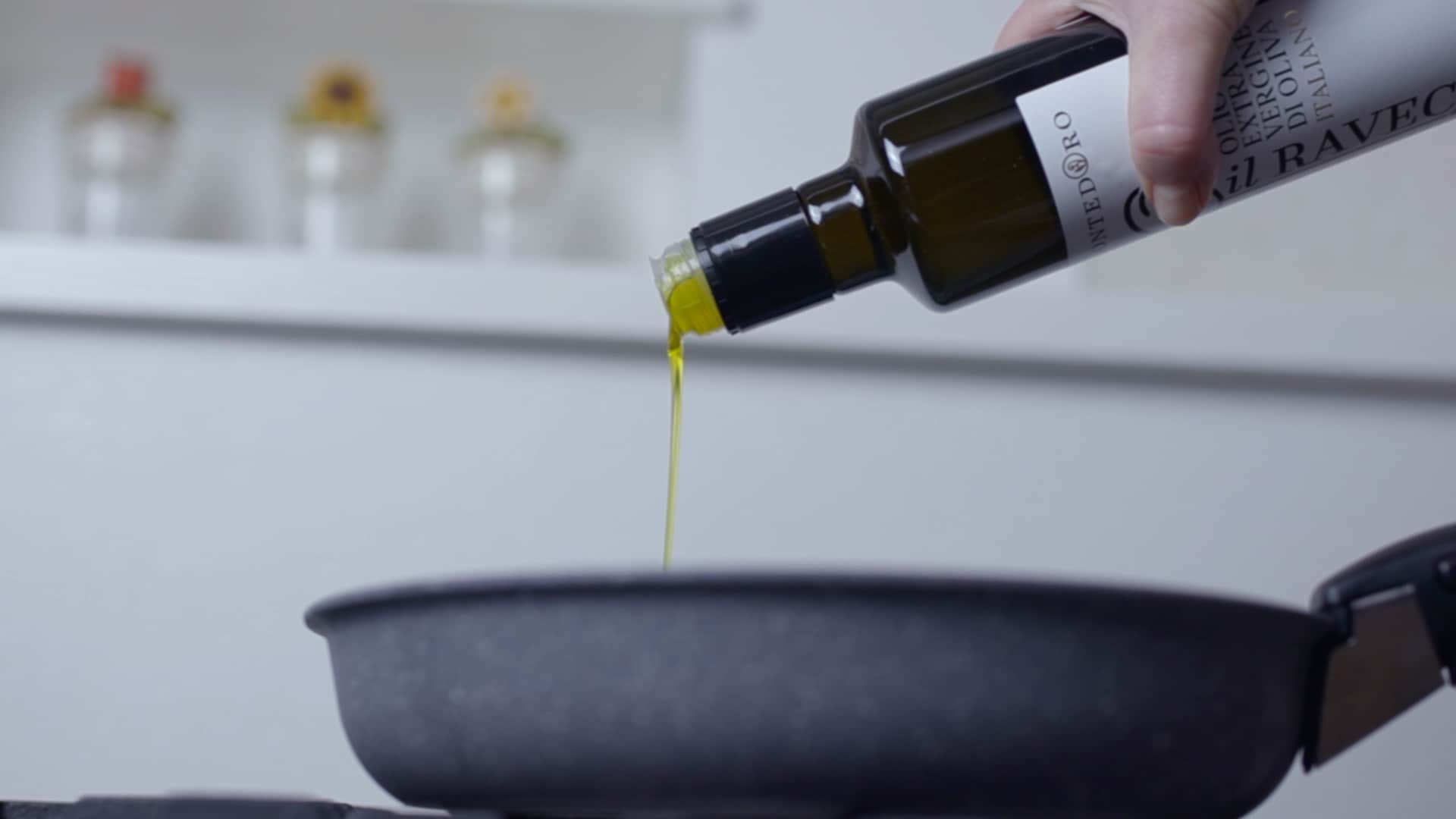
Those who have been fortunate enough to visit an oil mill during the harvest period know that freshly pressed oil has a vibrant, almost fluorescent color, between green and yellow, with herbaceous notes and a bold taste. It is at this moment that the oil is at its peak in terms of freshness, aroma, and nutrients.
The choice between an olive green oil and a golden yellow one depends on your taste and its use in the kitchen.
In both cases, it is essential to choose 100% Italian extra virgin olive oil, cold-pressed and produced using artisanal methods.
If your oil changes color over time, do not be immediately alarmed. A slight yellowing is normal with natural oxidation, especially if the oil has been exposed to light or heat. The important thing is to store it in a cool place, away from direct light and in dark bottles. Discover here how to best preserve it.
In our Contedoro oil mill, extra virgin olive oil is cold-extracted with care within 24 hours of harvest. We do not chase the perfect color, but true quality: the kind recognized upon tasting. Our oil is brilliant green when freshly squeezed, then evolves naturally without losing its properties.
Never judge an oil solely by its color. Taste it, feel it, get to know who produces it. Because like every artisanal product, extra virgin olive oil has a soul, and color is just one of the many nuances that tell its story.