
If you want to know the phases, methods and process for making oil, you are in the right place. Rich in active ingredients and antioxidants, extra virgin olive oil is a noble fat. Its organoleptic properties, as well as its aroma and flavor, make it the best vegetable fat in the world.
Extra virgin olive oil, also known as EVO oil, is a food oil extracted from the fruits of the olive tree and is a typical food of the Mediterranean area: a precious and ancient product, with high economic value. Extra virgin olive oil is a key food in the renowned Mediterranean diet which, thanks to the quantity of monounsaturated fatty acids it contains, is an important product for the body’s well-being.
But what are the processing steps of extra virgin olive oil before it appears on our tables?
The production chain is essentially divided into seven phases:
Let us now analyze each of them in detail:
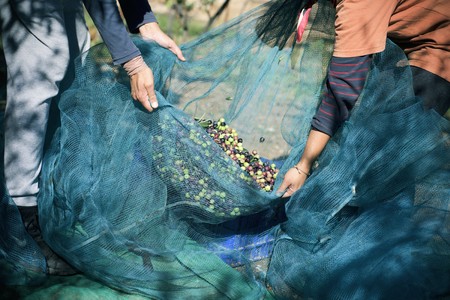
Olive harvesting is a very important phase for oil production. The taste and quality of the oil depend on the techniques used and the period in which this operation is carried out. In reality, it is not as simple a process as it may seem, but is made up of techniques and secrets that are handed down to ensure the best final result.
The first aspect to consider is the type of olive to be harvested, as this factor affects both the condition in which it must be harvested and the time of year in which it is considered ripe. For a good harvest, it is advisable to wait for the color change of the fruit (the so-called veraison) to pass from green to black, as this is the phase in which there is a greater quantity of oil and nutrients that lead the final product to have superior quality.
Each harvesting method has different effects on the fruit and the final product, so it is always better to carefully evaluate the technique based on your needs.
Harvesting can be carried out in two ways:
The main hand-harvesting techniques are:
• Beating
This is a very ancient method that consists of “beating” the branches of the olive tree with sticks to make the olives fall, and then collecting them with nets placed on the ground. This technique has the disadvantage that the fruits risk being easily damaged after impact with the ground, which is why it is now considered obsolete.
• Hand-picking
This consists of picking the olives by hand directly from the branches. It has the great advantage of not damaging the olives and is suitable for producing oils of the highest quality as all the fruits are selected by hand individually.
• Gathering
This simply consists of collecting ripe olives from the ground that have naturally detached from the branches. This method is strongly discouraged, as the olives are already excessively ripe and therefore will not produce high-quality oil.
No less important in order to obtain quality oil is the olive storage process. This first processing phase should not be underestimated, as if the olives remain too long on the branches or are left on the ground, they can undergo a maceration process detrimental to subsequent oil production.
To avoid compromising the quality of the olives, ideally they should be taken to the mill within 48 hours of harvesting. This fruit is so delicate that great care must also be taken with the type of container used for storage. The olives must be collected in special “ventilated crates” made of plastic, and then stored away from heat sources. This ensures that the olives do not ferment anaerobically, giving rise to the formation of aliphatic alcohols that would produce defects in the oil such as “heating” and in extreme cases even mold.
Sacks should definitely be avoided, where the olives are crushed, giving rise to those processes that inevitably deteriorate the fruits. Another container we do not recommend is the wooden crate as it is easily attacked by mold.
Before being introduced into the actual processing cycle, the olives must undergo defoliation and washing operations both for hygienic-sanitary reasons and for qualitative reasons of the oil.
Since oil is a food product, it is correct and necessary, in compliance with the most basic hygienic-sanitary standards, that the raw material from which it is obtained is free from harmful substances.
Furthermore, removing the material that often accompanies the olives is particularly appropriate when the oil mill uses the metal crusher for the preparation of the olive paste and the centrifugal decanter for the separation of the oil. In this case, in fact, the presence of leaves could affect the organoleptic characteristics of the oil.
Obviously, for washing the fruits, drinking water is used, to be changed frequently enough to obtain good hygiene of the olives and to avoid the appearance of bad odors that could contaminate the oil.
Finally, the washing machines are equipped with a special supplementary shower sprayer that performs the final washing with tap water to remove any possible risk of contamination and to ensure the elimination of possible residues of organic substances used to protect the crop from external agents.
In the milling process, the harvested olives, after being cleaned and washed, are subjected in the mill to mechanical actions with the aim of causing the rupture of the cell wall and the membranes that compose them. In this way, the oil flows out of the fruit, allowing the product to be collected and to move on to the subsequent processing phases.
The rupture is carried out naturally by the rubbing of the pits against the ends of the fruit, or by the collision of special mechanical tools. A “raw” olive oil is thus extracted, also called oil paste, a semi-fluid compound that constitutes the main product of olive milling. It often happens that in the processing of quality foods such as extra virgin olive oil, each phase can be performed in different ways depending on the needs, the type of plant, the final product and the traditions or company choices. The systems used for milling are mainly two: classic milling and crushing.
It is carried out using the “millstone“, a tool belonging to tradition and derived from classic stone mills. With this technique, the mechanical action is exerted with large wheels, usually made of granite, which rotate on the fruits.
There are also blades on the wheel that have the function of removing the oil paste that adheres to the surface, improving its mixing.
This is a technique performed by means of an industrial machine called, precisely, hammer crusher. Loading is carried out from above thanks to belt elevators that take the fruits directly from the washing machines and pour the oil paste from below into the malaxers. Through this type of milling, the rupture of cell walls and membranes is caused by the impacts of mechanical devices rotating at high speed, which occurs in very short times, making this technique perfect for continuous and automated processing cycles.
In crushing, the enzymes present in the pulp and seed are activated by the rupture of cell walls. This is not necessarily negative: it is true that oxidation is facilitated and therefore the organoleptic quality of the oil decreases, but it is also true that in this way those volatile substances responsible for its typically fruity aroma are extracted.
Classic milling, on the other hand, involves a decidedly lower degree of emulsification, allowing a higher yield to be obtained. The taste will be less pungent and bitter, because polyphenols are present in smaller quantities.
In summary, it can be stated that the classic olive milling system is suitable for producing oils of higher quality, so the selling price will be higher, allowing the high production costs to be recovered.
This is the process that follows milling or crushing and has the purpose of breaking the emulsion between water and oil and making the oil micelles flow into larger drops that tend to separate spontaneously from the water.
It is carried out in steel tanks called malaxers in which helical blades rotate, keeping the oil paste in slow mixing.
This phase is very important in determining the relationship between quantitative yield and oil quality. In fact, heating will increase the effectiveness of malaxation, allowing the oil yield to increase, but will negatively affect quality.
Extraction is the process that finally sees the appearance of a product close to the one we know: in this case too, there are different techniques to complete this phase of olive oil production. Let us briefly see them:
Extraction by pressing is characterized by a series of well-defined phases. Pressure is applied to the malaxed compound which separates the liquid portion from the pomace. The resulting fluid must then be centrifuged (centrifugation) in order to obtain a first separation of water from oil. The compound obtained is then subjected to filtration from which virgin olive oil is obtained.
With centrifugation, on the other hand, all 3 final components are obtained simultaneously with a single and continuous process. Centrifugal extraction of the malaxed paste uses the difference in the three specific weights of the compounds, obtaining separately: pomace, virgin olive oil and water.
Extraction by percolation and selective filtration adopts a different physical process: the greater surface tension of oil compared to that of water is used:
A large steel plate is immersed in the malaxed paste which, thanks to the difference in surface tension between the two fluids, is mainly wetted with oil; causing it to drip into another container. The percolate will produce oil and must, which will subsequently be centrifuged to obtain more oil at the expense of water.
Or it can generate oil and non-final pomace, from whose centrifugation must and pomace are obtained. One or the other method is applied based on the type and effectiveness of percolation.
At this point the product obtained is ready for consumption, but still contains solid residues and appears muddy to the eye. It therefore needs to be stored in stainless steel tanks, following chemical and organoleptic tests. The temperature for optimal storage is 15°-17°C in the absence of sunlight.
During the storage period, the oil undergoes a sophisticated natural decantation process, without further filtration, so the mucilage from the skin and the suspended water particles will settle at the bottom of the tank. This natural filtration gives the oil greater clarity without affecting its qualitative, nutritional and organoleptic characteristics; on the contrary, it allows our oil to preserve the typical tastes and sensations of the fruit.
The final part of the oil production chain takes place in rooms adjacent to the olive processing areas, observing the complex HACCP regulations.
It is certainly one of the most delicate phases precisely because it is necessary to limit contact with air during transfer. Packaging is carried out by specific equipment that allows the oil to be poured into suitable containers.
The oil is then bottled and hermetically sealed, avoiding alteration of its organoleptic properties.
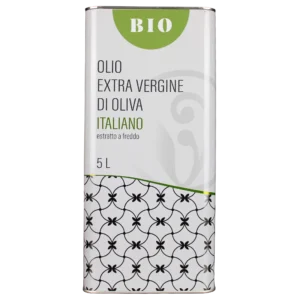
The containers must be made of dark glass to avoid contact with light, or alternatively special tinplate containers can be used, previously treated with antioxidant materials.
Another important factor during the bottling phase is the overall time of the operation. In fact, it must be brief to safeguard the taste and flavor of the oil.
Once these 7 oil production phases are completed, you can finally enjoy an excellent New Oil.