
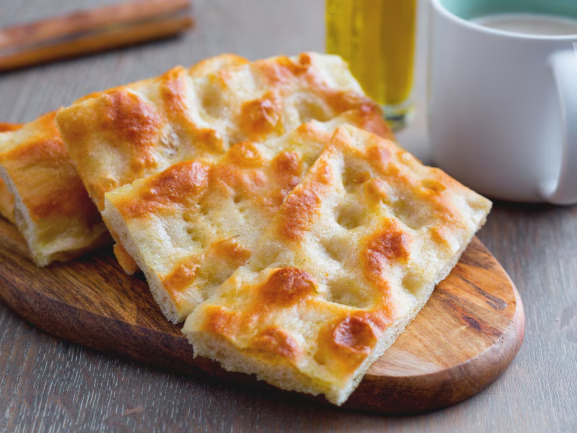
Genoese focaccia, known in dialect as fügassa, is much more than a simple leavened product: it is a symbol of Ligurian tradition, a daily ritual that smells of the oven, the sea, and extra virgin olive oil.
Thin, soft, glossy, full of dimples, and with those grains of salt that melt in your mouth… it is impossible not to fall in love at the first bite.
The secret of true Genoese focaccia? The brine of water, salt, and oil, generously poured before the final proofing. It is what provides that golden, moist, and incredibly soft surface that makes this focaccia unique in the world.
Follow me step by step: I will explain how to prepare an authentic Genoese focaccia at home, fragrant and irresistible, just like the one eaten in Genoa.
Genoese focaccia is such an identity-defining product that it is recognized as a Slow Food Presidium.
Its essential characteristics are:
Traditionally it is eaten on its own, stuffed… or, for true Genoese locals, dipped in cappuccino.
For the dough
350 g Manitoba flour (W 450–460)
150 g type 0 flour
300 g water at room temperature
1 heaping teaspoon of dry yeast (or 8 g fresh)
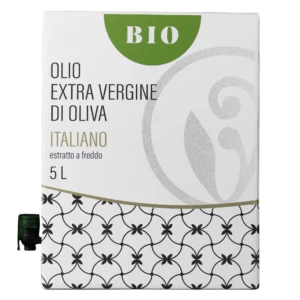
30 g extra virgin olive oil
1 teaspoon of honey
10 g fine salt
For the brine
120–150 ml water
2 tablespoons of extra virgin olive oil
2 generous pinches of fine salt
1 tablespoon of coarse salt
👉 The oil is not a detail here: choose a high-quality one, because it is the protagonist of the final flavor.
1. Prepare the biga
Mix 100 g of flour (taken from the total), 60 g of water, and the yeast.
Form a small ball, cut a cross into it, cover, and let rise at 26 °C for 1½–2 hours, until doubled.
Add to the biga:
Knead for a few minutes, then slowly incorporate the oil.
When the dough is elastic, add the salt and form a smooth ball.
Cover and let rise for 3–4 hours, until tripled in volume.
Turn the dough out onto the surface, form a ball, and let rest for 10 minutes.
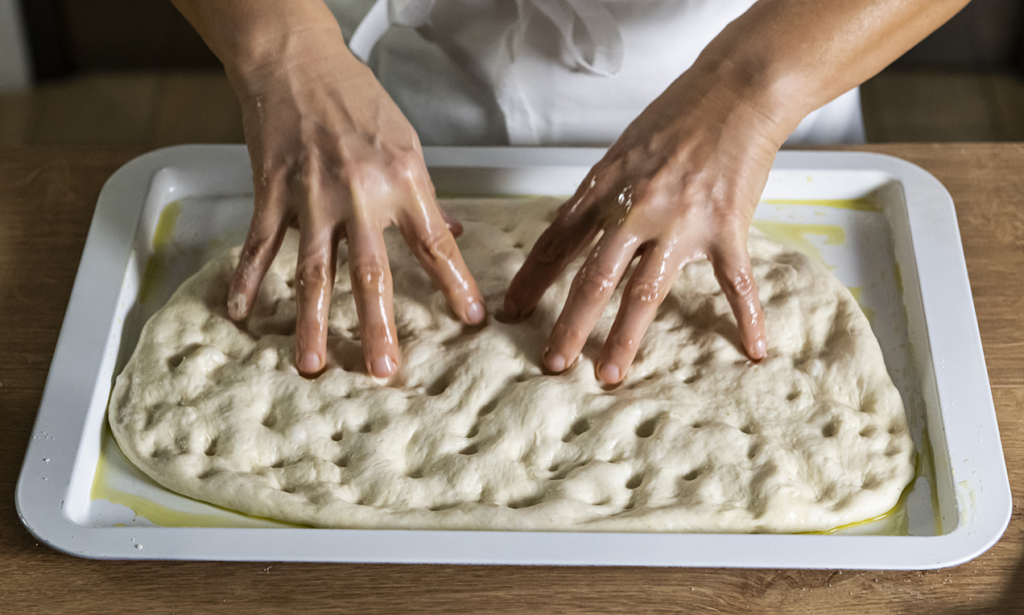
Roll out with a rolling pin and transfer to a lightly greased tray.
Let rise:
Using three fingers (index, middle, and ring), press firmly into the dough.
The dimples must be:
They are what hold the brine and create the magic.
Mix water, salt, and oil until the salt dissolves.
Does it seem like a lot? It isn’t. Trust me.
Pour it over the entire surface: every dimple must be full.
Let rise for another hour, until the brine is partially absorbed.
Complete with:
Remove from the oven and the tray immediately.
The focaccia must be:
✔ golden
✔ glossy
✔ fragrant
✔ soft to the touch
at room temperature, well sealed: 2 days
frozen once cooked: excellent
raw dough: can be frozen before rolling out
Homemade Genoese focaccia is one of those recipes that teach patience, respect for timing, and the beauty of simple things.
Flour, water, yeast, salt… and high-quality extra virgin olive oil: few ingredients, but well chosen.
A recipe that smells of Liguria, of a warm oven, and of a shared table.
A focaccia that, once tried, you will never forget.