
When we pour a drizzle of extra virgin olive oil on a slice of bread, on a salad, or on a freshly prepared dish, we rarely think about everything that happened before that oil reached our table.
Behind every bottle, there is in fact a journey that begins in the olive grove and continues in the mill: olive harvesting, transport, washing, crushing, malaxation, extraction, separation, and storage.
Every step can influence the characteristics of the final product.
Yet, when talking about oil production, one expression is still very often used: “olive pressing”.
But are the olives really pressed?
In modern continuous cycle mills, not exactly.
Traditional pressure using presses and fiscoli has been progressively replaced by systems in which oil separation occurs mainly through mechanical centrifugation processes. For this reason, when speaking of a modern oil mill, it is more correct to use the expression extra virgin olive oil extraction.
At the Contedoro oil mill, we use a continuous cycle plant designed to process olives without adding water during the extraction phase, with a process oriented towards preserving the characteristics naturally present in the fruit as much as possible.
It is here, in the heart of the mill, that the work carried out throughout the year in the olive groves meets technology, experience, and production process control.
If you want to learn more about our production philosophy, you can explore the Our oil page.
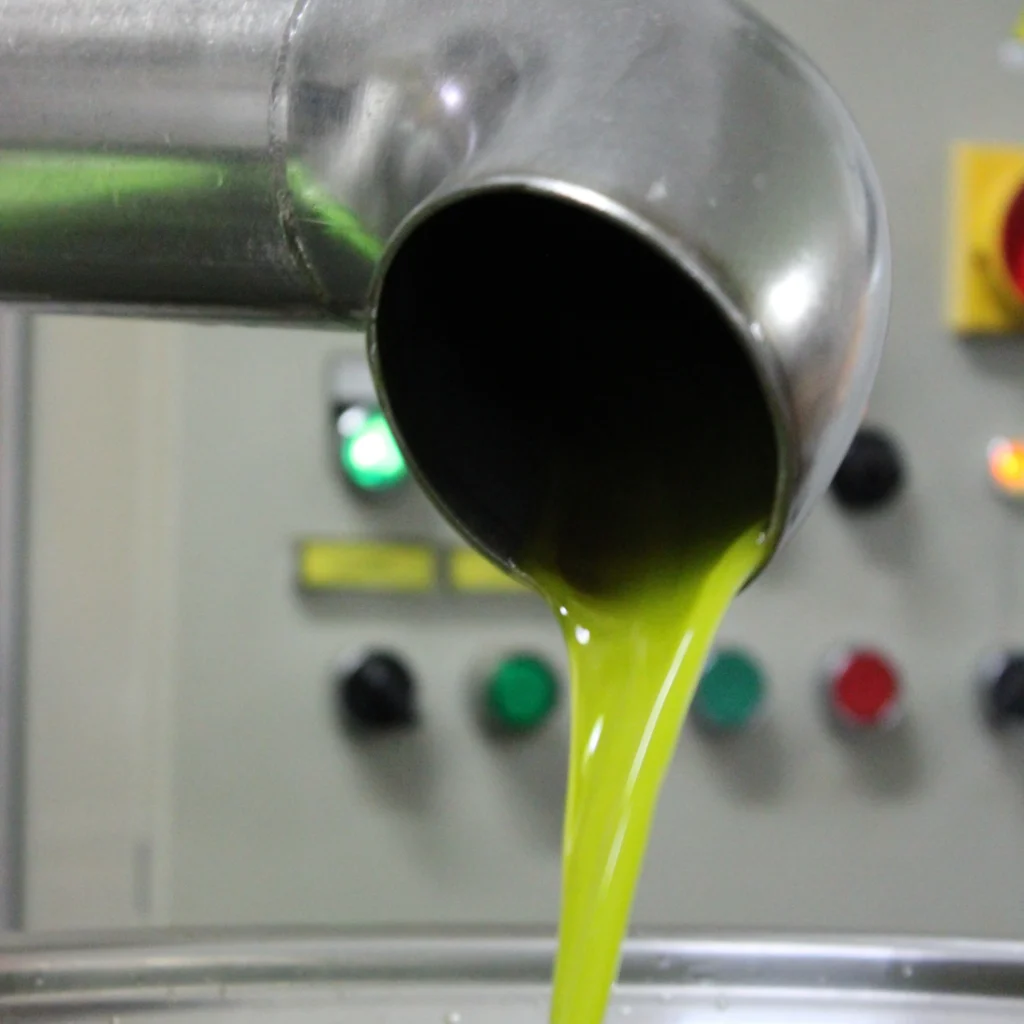
In this guide, we will see how extra virgin olive oil is produced, what cold extracted really means, what the difference is compared to first cold pressing, and what the main stages are that transform a freshly harvested olive into EVO oil.
“How are olives pressed?” is a very common question.
To answer correctly, one must distinguish between a traditional oil mill and a modern continuous cycle mill.
In the past, speaking of pressing was technically correct.
In traditional systems, after being crushed, the olives became a paste that was distributed on special filtering discs called fiscoli.
The fiscoli were stacked and subjected to the pressure of a hydraulic press. A liquid part composed of oil and water naturally contained in the olives emerged from the paste, which was subsequently separated.
From this process comes the expression still widely used today:
“olive pressing”.
In modern continuous cycle plants, however, the operating principle is different.
The paste is not squeezed between fiscoli by means of a press: it is processed and subsequently sent to mechanical separation systems based on centrifugation.
For this reason today, when we talk about most modern oil mills, the technically more appropriate term is oil extraction.
It depends on the system used to produce it.
And it is precisely here that one must distinguish between two expressions that are often confused:
first cold pressing
and
cold extraction.
They are not simply two different ways of saying the same thing.
This distinction is also important when we read the label of a bottle of EVO oil.
The wording “first cold pressing” refers to oils obtained through the first mechanical pressing of the olive paste using a traditional press system, with temperatures below 27 °C.
The wording “cold extracted”, instead, concerns oils obtained through percolation or centrifugation processes of the olive paste, always maintaining temperatures below 27 °C.
The main difference can be summarized as follows:
First cold pressing → traditional system with presses.
Cold extracted → modern system based on percolation or centrifugation.
In the case of a modern continuous cycle mill, therefore, speaking of cold extraction is technically more correct.
This also clarifies a very common misunderstanding: finding “cold extracted” written does not mean that the oil is of lower quality than one defined as “first pressing”.
The two expressions describe different production systems.
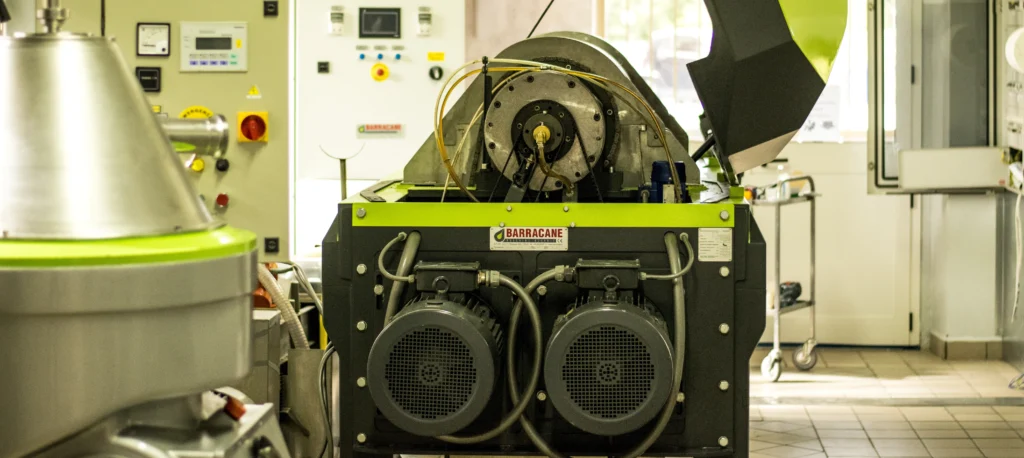
The expression cold extracted is often used when talking about extra virgin oil, but it is not always clear what it concretely means.
The fundamental point is the temperature control during the process.
In cold extraction, the temperature is kept below the threshold required to use this indication.
Why is it important?
Because during olive processing, it is necessary to find a balance between process efficiency and protection of the product’s characteristics.
Processing temperatures and times, especially during malaxation, must therefore be carefully managed. The source document emphasizes precisely how these parameters can affect yield, aromatic profile, and oil characteristics.
That is why simply talking about “crushed olives” tells only a very small part of what actually happens inside a modern oil mill.
A very common mistake is to think that the quality of the oil depends exclusively on the mill.
In reality, a good oil is born before entering the mill.
Technology can help preserve the characteristics of the olives and correctly manage the processing, but it cannot transform poor quality olives into excellent raw material.
To obtain a good extra virgin oil, several factors are fundamental:
The process is therefore a quality chain.
If one stage is poorly managed, subsequent processing cannot simply erase its effects.
As also highlighted in the source document, the final quality depends on decisions that begin in the olive grove and continue throughout the entire production process.
Read also: How to recognize a quality extra virgin olive oil
To truly understand how extra virgin olive oil is made, it is useful to observe the entire journey of the olives.
The main stages are:
These steps were already identified in the source text as the fundamental stages of the process.
Let’s look at them more closely, starting right from the olive grove.
Even before the mill comes the olive grove.
The quality of the oil is born from the olives.
The health status of the fruit and the degree of ripeness are determining factors for the final result.
Harvesting at the appropriate time means seeking a balance between the amount of oil present in the fruit and the desired qualitative and sensory characteristics.
Furthermore, not all cultivars ripen at the same time and not all oils must have the same profile.
For this reason, the producer must know their olives and establish the time of harvest also based on the oil they want to obtain.
In the Irpinia territory, one of the most representative cultivars is the Ravece, a variety with a strong territorial identity to which Contedoro also dedicates its own line.
To learn more, you can discover the Monocultivar Ravece oil.
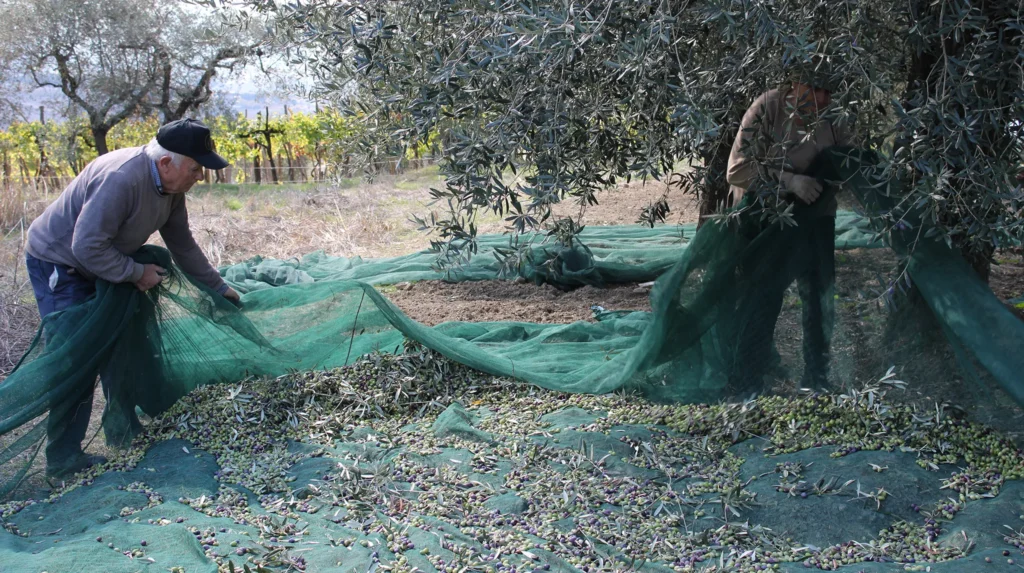
Harvesting well is not enough.
Once separated from the tree, the olives must reach the mill and be processed in a timely manner.
Leaving them piled up for prolonged periods, especially in poorly ventilated conditions, can favor undesirable fermentation phenomena and compromise the quality of the raw material.
The original document emphasizes precisely the importance of minimizing the time between harvesting and crushing and avoiding poorly ventilated bags or piles.
For this reason, a correct organization of the oil campaign must link:
harvesting → transport → mill processing capacity.
The goal is simple: to bring olives that are as fresh and intact as possible to processing.
This aspect becomes particularly evident during the new oil period, when the mill enters the most intense time of the year.
Read also: New oil: characteristics, production period, and how to enjoy it
Once they arrive at the mill, the olives may contain leaves, small branches, and other plant material collected during field operations.
Before processing, it is therefore necessary to separate these elements from the fruit.
Through a defoliation system, leaves and twigs are removed, preparing the olives for the next stage.
It is an apparently simple step, but it is part of that succession of operations necessary to process a clean and correctly prepared raw material.
After defoliation, we move on to washing.
The olives are cleaned to eliminate soil, dust, and surface impurities before entering the crusher.
The goal is to have the clean fruit proceed through the production process, preventing foreign materials from interfering with the subsequent stages.
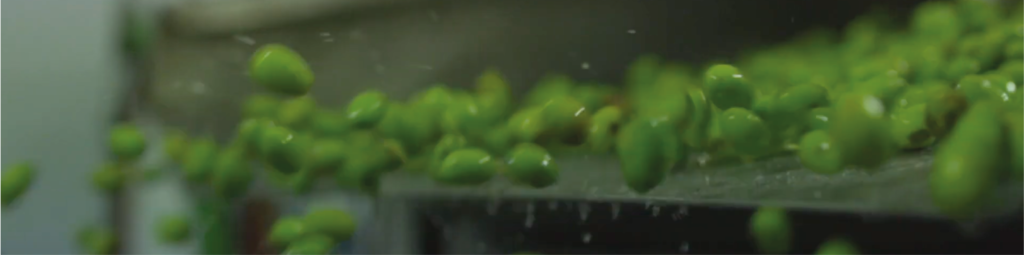
After cleaning comes one of the most important stages of the entire process: olive crushing.
It is at this moment that the whole fruit is transformed into a paste.
During crushing, the following are involved:
The purpose is to break the cellular structures of the pulp, favoring the release of the oil contained in the fruit.
In modern plants, this operation is carried out through crushers designed to ensure continuous and uniform processing.
And it is important to understand one aspect: crushing is not a neutral stage.
The way it is performed can contribute to influencing the characteristics of the oil that will be obtained.
That is why a modern oil mill does not simply “break the olives”: it manages every stage according to the raw material and the desired result.
After crushing, the olive paste is transferred to the malaxers.
For those who have never visited an oil mill, malaxation is probably one of the least known stages of oil production.
The paste is mixed slowly and in a controlled manner.
For what reason?
After crushing, the oil is present in the paste in the form of tiny dispersed droplets.
Malaxation favors the union of these small droplets into larger droplets, making the subsequent separation stage more effective.
It is a delicate stage because time and temperature must be carefully controlled.
And it is precisely here that the difference between the old concept of “pressing olives” and the operation of a modern continuous cycle mill begins to become even clearer.
The oil is not simply squeezed out of the fruit.
It is obtained through a precise succession of mechanical operations, each of which performs a specific function.
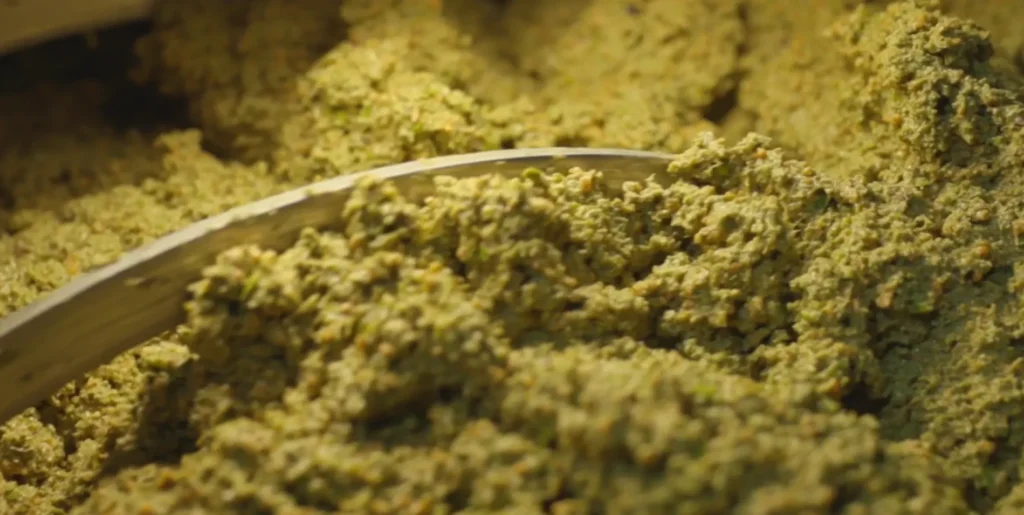
At this point, we have obtained a correctly prepared olive paste.
But how is the oil actually separated from the paste?
This is where one of the most important elements of a modern continuous cycle plant comes into play: the decanter.
In the second part, we will enter the technological heart of the mill and see:
Read also: The different varieties of olives and their impact on extra virgin olive oil