
Specific gravity is a value that can be calculated for all materials, both solid and liquid. However, this measurement is more or less important for certain elements.
In our case, it is very important to know the specific gravity of olive oil. We will see below why. Here we want to start with the definition of specific gravity and how it is calculated.
INDEX

We speak of specific gravity by defining it as the relationship between weight and volume of a substance. Let’s take a practical example with the specific gravity of water. If we measure 1 liter of water on a kitchen scale (excluding the tare of the bottle), it will weigh approximately 1 kg, which corresponds to 1 cubic decimeter (1 dm3).
The specific gravity of a material is the ratio between weight and volume (Specific gravity equals weight – expressed in kg – divided by volume – expressed in dm3).
Now that we have understood the definition of specific gravity and how it is calculated, let’s verify what the specific gravity of oil is.
Having defined that specific gravity is the relationship between weight in kg and volume, we can also say that the specific gravity of oil is 916 grams per cubic decimeter. However, this is not always a precise figure because the determination of specific gravity is caused by many factors that we will see below. The fact remains that these variations can lead to an oil density of approximately 920 grams per cubic decimeter. The oscillation of the specific gravity of oil can therefore vary between 916 and 920 grams. By convention, we consider the value of 916 grams.
Now, 916 grams corresponds to 0.916 kg. Having seen above that the specific gravity of water is 1 kg, we have the answer to why oil floats on water: oil weighs less than water, so it tends to rise to the surface. The experiment is simple: add a drop of oil to a glass containing water. The viscous drop of oil rises to the surface.
First and foremost, the variety of olives, the so-called cultivars. Italy is known for its multiplicity of varieties, each with different yields. From some of them, very dense oils can be obtained, while from others, oils with lower specific gravity. For our oils, we at Contedoro, for example, mainly use Ravece olives and Ogliarole, because in addition to being typical of the Irpinia territory, they also provide very profitable and quality oil yields.
Another factor that affects specific gravity is the method in which extraction from olives is carried out. Remember that the residues remaining after crushing the olives will affect the density of the oil.
Finally, the temperature of the crushing process also affects specific gravity. If you don’t know, the measurement of specific gravity is carried out at an oil temperature of 15 degrees.
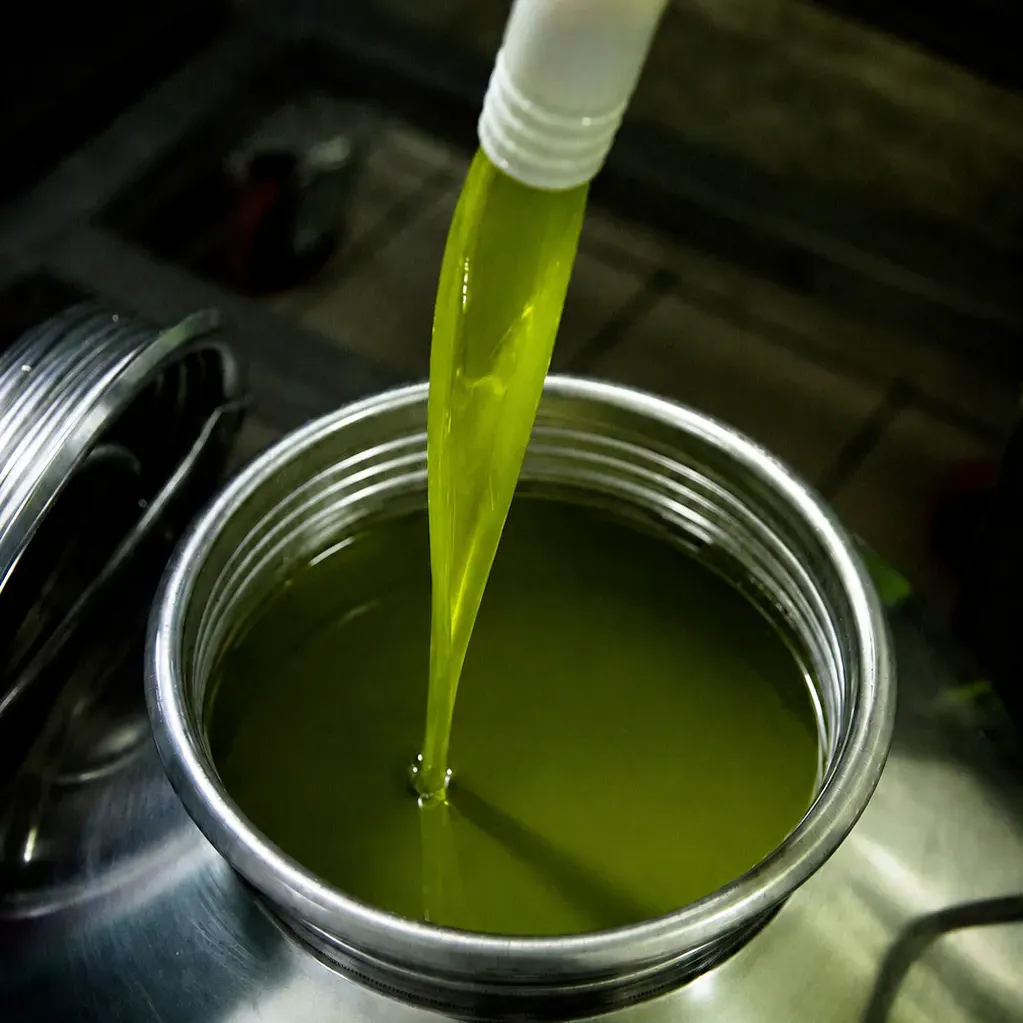
In summary:
The specific gravity of olive oil must be considered in relation to various characteristics that we list here:
These are all elements that we and other professionals in the sector take into strong consideration because they determine the quality of our oil.
But why do we talk about our oil in kg and not in liters.
Now that we have seen the specific gravity of oil and the factors that determine it, we can understand why.
The density of oil is a physical property that describes the mass of a unit volume of oil. The density of oil is influenced by various factors, including temperature, the type of oil and the production method. The density of oil can be an indicator of its quality and its concentration of nutrients. Furthermore, the density of oil can affect its viscosity, that is, its ability to flow or resist flow.
To measure the density of oil, units of measurement such as grams per milliliter (g/mL) or kilograms per liter (kg/L) are used. The density of oil can vary considerably based on the type of oil.
For example, olive oil has a density of approximately 0.92 g/mL, while coconut oil has a density of approximately 0.92 g/mL. However, sunflower seed oil has a density of approximately 0.92 g/mL, which demonstrates that the density of oil can be similar between different types of oil.
The density of oil can also vary based on temperature. When oil is heated, its density decreases, which means it has a lower mass per unit volume. Conversely, when oil cools, its density increases, which means it has a greater mass per unit volume. The variation in oil density based on temperature can affect its viscosity and its ability to flow.
For further information on oil density, contact us – we are always available to provide all technical explanations to enthusiasts!

The weight of a liter of oil depends on its density. In general, oil has a lower density than water, which means it weighs less than water per unit volume. For example, water has a density of approximately 1 g/mL, while the density of oil can vary from 0.80 to 0.98 g/mL. Therefore, a liter of oil will always weigh less than a liter of water.
The specific gravity of a liter of oil depends on its specific density. For example, if the oil has a density of 0.92 g/mL, then a liter of oil will weigh approximately 920 grams or 0.92 kilograms. However, if the oil has a different density, then the weight of a liter of oil will be different.
For further information on the weight of oil and its density, you can consult our blog, where you will find insights into the various properties of oil and the factors that influence its weight and density.
Understanding the density of oil and its specific gravity is important – do not underestimate it. Knowing how to correctly measure the density of oil and its specific gravity can help ensure quality and food safety, as well as optimize food production and preservation processes.
Read also: Extra Virgin Olive Oil Price, Here is the Cost of Italian Extra Virgin Olive Oil
Above we answered the question: “how much does a liter of water weigh?”
We saw that a liter of water corresponds to one kg.
But if you were wondering how much a liter of oil weighs, now we have the answer: 1 liter of oil weighs 916 grams. Knowing this value is important to understand that, when purchasing oil, liters and kg are not equal (as they can be for water). On the contrary, it is good to know that if you are buying 10 kg of oil, you are buying almost 11 liters (10.91 liters). Conversely, if you are purchasing 10 liters of oil, it will weigh 9.16 kg.
Having said this, we can say that oil is denser than water and it is precisely the specific gravity that determines its density.
But now, why is oil weighed in kg at the mill? We will see this after evaluating what the factors are that determine the specific gravity of olive oil.
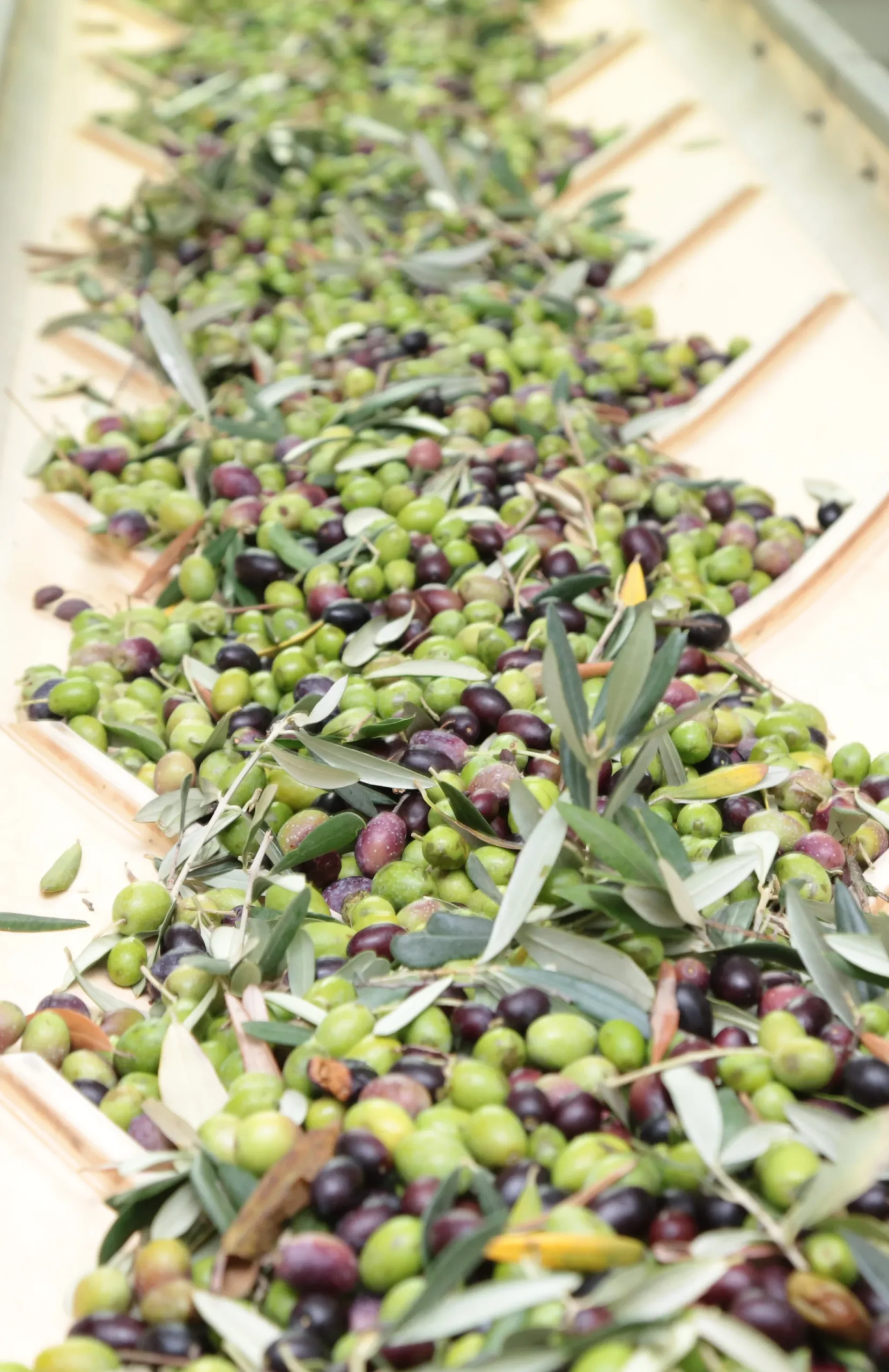
We measure our oil in kg simply because the raw material with which we produce it is measured by its weight, in kilograms. Our olives are solid elements that we weigh in kg and, to establish their yield once the oil is produced, we must use the same unit of measurement.
However, when we buy oil, we must know that, given everything we have seen above, a one-liter bottle of oil will weigh 0.916 kg. It is common practice to sell it in liters so as not to disorient the consumer who might think they have been cheated. However, we know that if we want to put 10 kg of oil in 10 one-liter bottles, these will not be sufficient.
But again, we want to help you better understand why it is useful to know the specific gravity of oil. Let’s take a practical example to convert the weight of oil into liters.
Suppose you have 1,000 kg of olives and from these 200 kg of oil are extracted. Knowing that the specific gravity of oil is 0.916, to find out how many liters we have produced, simply divide the yield in kg by 0.916.
In short, we will have produced 218.34 liters of oil.
Knowing all these notions about olive oil allows consumers to remain alert to scams regarding olive oil.
It was 2018 when we Italian oil producers suffered a sharp drop in sales due to some famous Italian companies that sold their brand to foreign productions, such as Spanish or Moroccan.
In this situation, the damage was twofold: we Italian producers saw significant market shares stolen from us, and you consumers unknowingly had poor quality oil on your tables. The characteristics of these oils are inferior to those produced in our territory and the production methods are not cutting-edge. However, they were able to “deceive” consumers by offering attractive prices, branded with famous names.
This is why we insist on making you aware of the importance of the value of the specific gravity of oil. It is better to pay attention to the technical characteristics of the oil and its origin before making a wrong purchase.
In any case, it is better to buy directly from your trusted mill, which can provide you with all the relevant information.
Visit our shop here or contact us for information.
Extra Virgin Olive Oil is a very precious product for our beloved Italy and is often subject to counterfeiting. Therefore, to be sure you are purchasing quality oil, in addition to considering specific gravity, always go to a trusted retailer or mill.
We at Contedoro are very transparent regarding our production and sales methods, so if you want to know and learn all the dynamics of production, we await you at our facility to guide you into the world of Extra Virgin Olive Oil, among the aromas and flavors of a land that tastes of green.